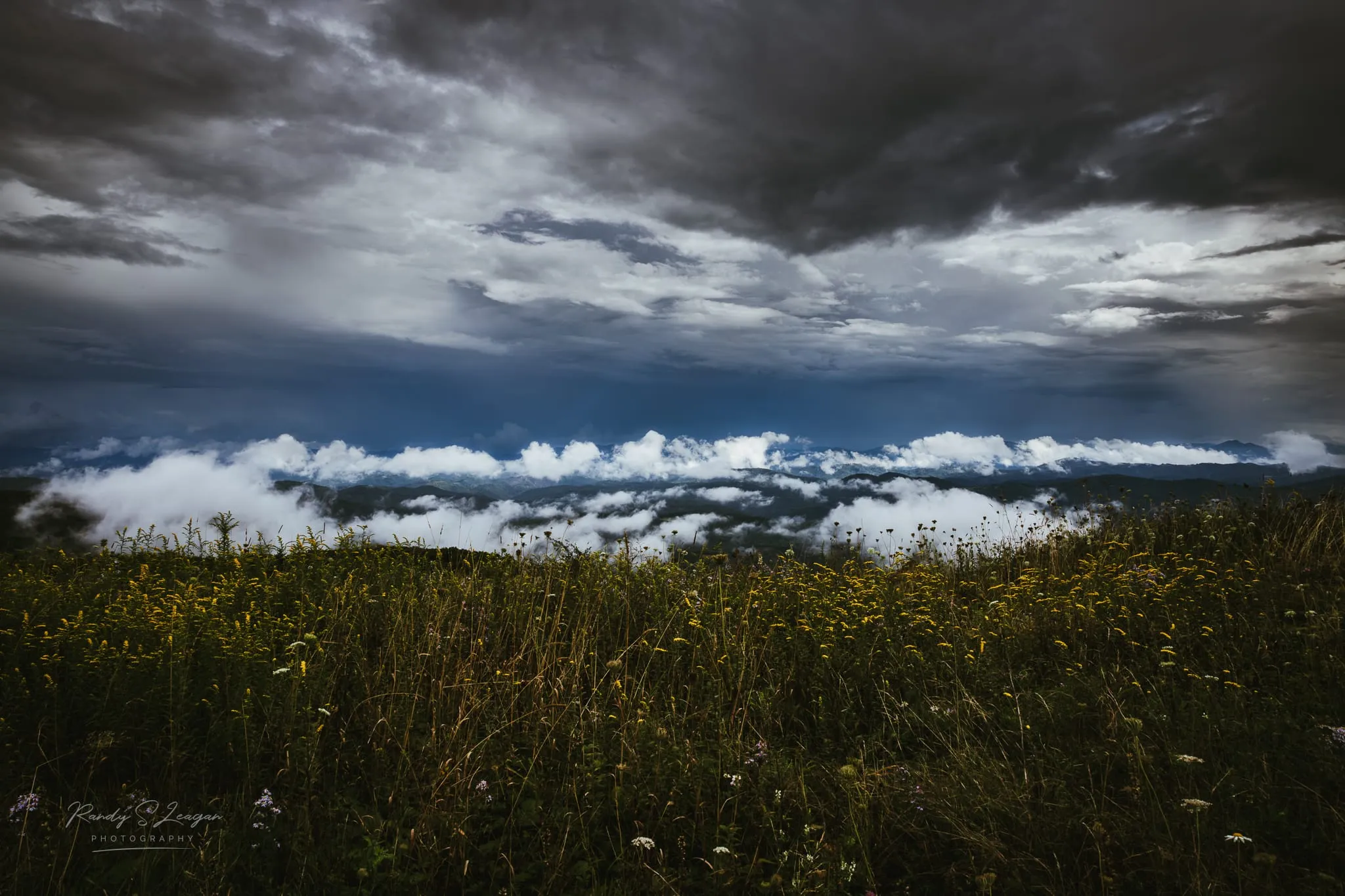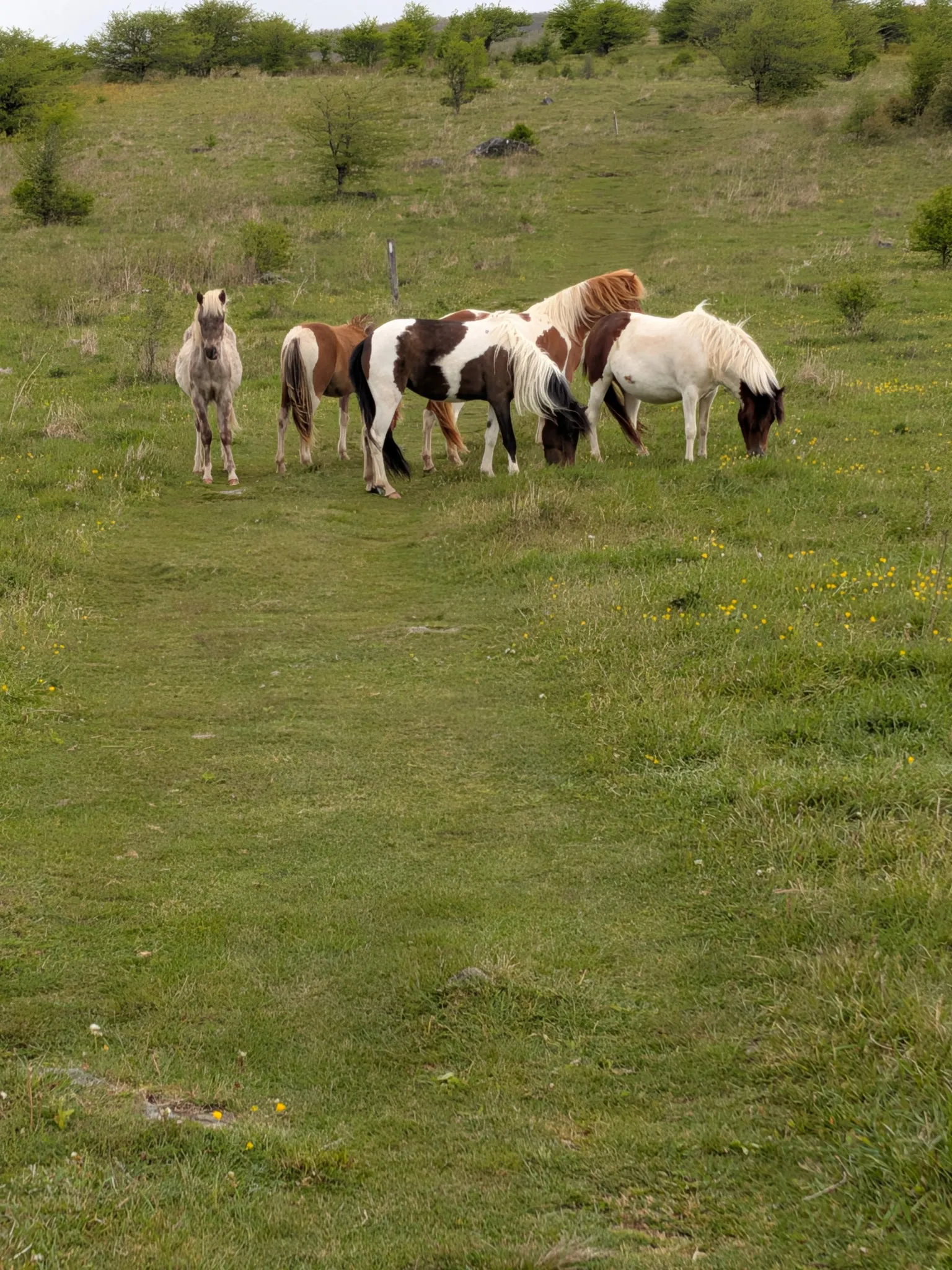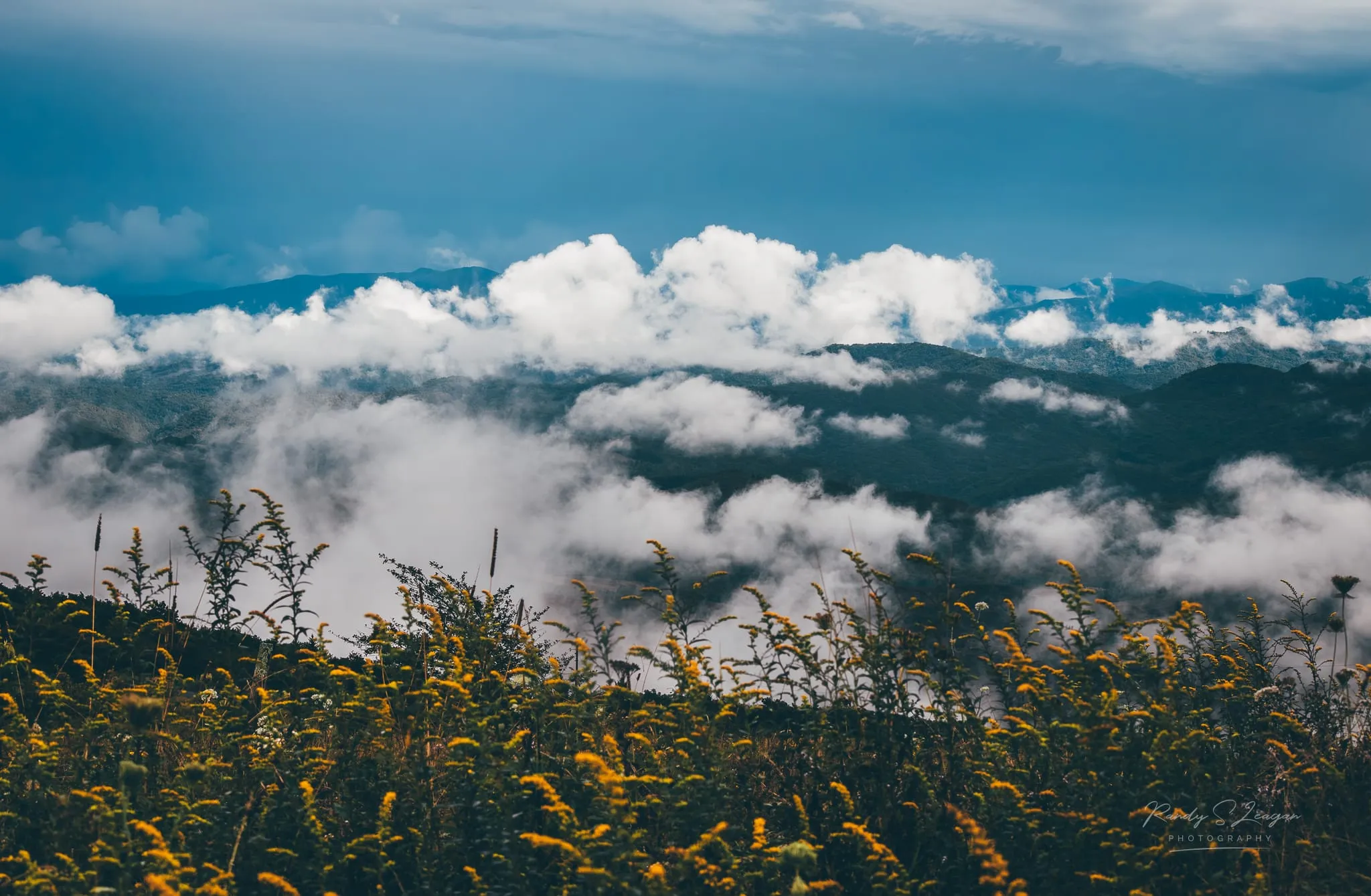
Most people who come to Grayson Highlands come for the ponies. A smaller group comes with a crash pad on their back and barely looks at them, because the same geology that makes the balds look like Scotland left several hundred boulders scattered across them.
It is, quietly, one of the best bouldering areas in the Southeast. Here’s what to know if you haven’t been.
What the climbing is like
Hard, featured rock on a high open plateau, at around 4,500 to 5,000 feet. The problems run from beginner-friendly slabs to genuinely stout testpieces, and the setting does a lot of the work — you’re climbing on open grassland with big views instead of in a wooded gully.
The altitude matters more than the grades suggest. It is meaningfully cooler up top than it is in the valley, which is a gift in August and a problem in November.
The two areas to start with
Contact Station. The cluster nearest the park office, reachable in about a minute’s walk. Small — around ten problems — but it holds several of the park’s most popular climbs, including True Grit, one of the most sought-after V5s up there. It’s the obvious warm-up stop and the easiest place to get your bearings.
Listening Rock Trail. The bigger of the two, with something like thirty-odd problems, and one of the most accessible boulder fields in the park — the first boulder is under a minute from the car, and there’s a developed trail to nearly all of them. The range is wide: Bi-Lingual at V1/2 for people finding their feet, Tigerside at V5, SLS at V9 for people who don’t need this article.
There’s a lot more beyond those two. Start there anyway.
Practical things worth knowing
Buy the guidebook at the park office. They stock the Grayson Highlands bouldering guidebook and maps, plus chalk and brushes — and, usefully, rental crash pads. If you’re flying in or just curious enough to try it for a day, you don’t need to own gear. There’s an app version of the guide too.
Park at the office and walk the Split Rock Bouldering Trail. It’s the sensible approach and it keeps traffic off the grass.
There’s a parking fee for the state park. Bring a card or cash.
Cell signal is poor to nonexistent. Download the guide before you drive up. Tell someone your plan.
Autumn is the season. Cool, dry rock and the best light of the year. It’s also when everyone else turns up, so weekends fill.
Stay off the ponies’ patch. They’re free-roaming and they will investigate your pack, your chalk bag, and your lunch if you leave them unattended. They are not pets and they are stronger than they look — more on how to behave around them here.
Making a weekend of it
A bouldering trip here is usually two or three days, and the drive up to the park each morning is short from us. In between sessions there’s plenty to fill the day: the Appalachian Trail runs through the same high country, Mount Rogers is a straightforward walk from Elk Garden, and there’s fishing in the creek at the bottom of our field.
If you want a lift to a trailhead rather than driving, we run shuttles.
Where to stay
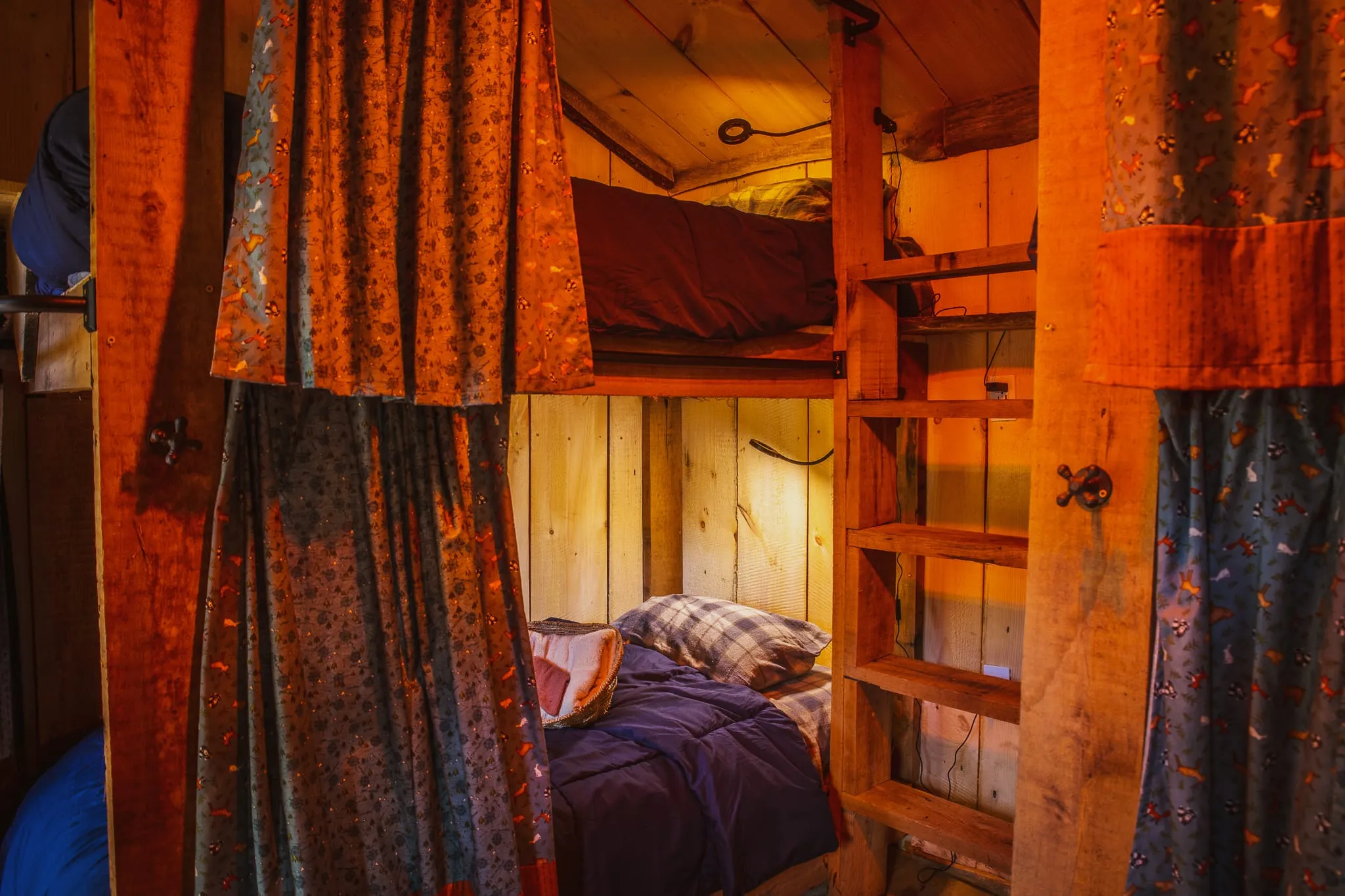
We’re at 10425 Highlands Parkway in Mouth of Wilson, on Highway 58, a couple of miles from the park entrance. Bunkhouse, yurt, glamping tent, tent sites, and car camping — plus an indoor heated shower, which after two days on rock is the amenity that actually matters.
There’s a rec room, Starlink WiFi, a grill deck on the creek, and a fire pit. See the stay page or book directly.
We don’t rent crash pads — the park office does that — but if you need backpacking gear for the trail side of the trip, that’s on the rentals page.